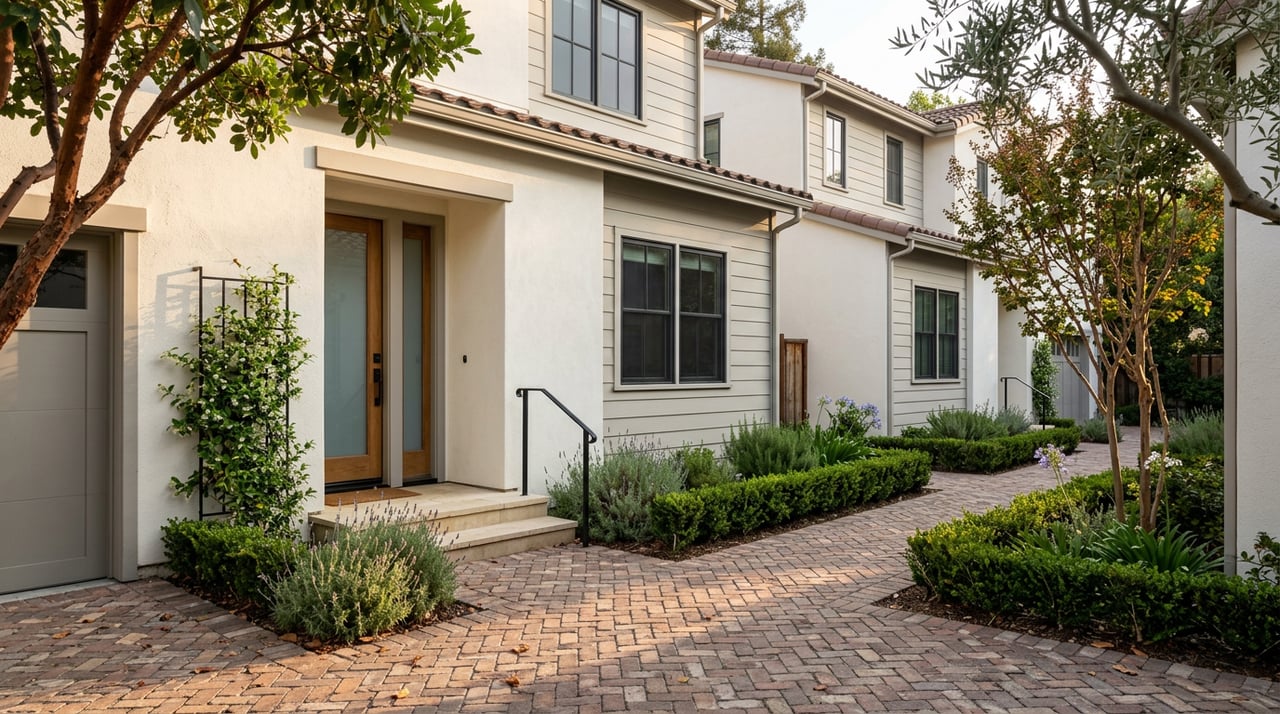
Thinking about buying in Sunnyvale and stuck between a townhome and a single-family home? You’re not alone. Both options can work well here, but they come with very different costs, responsibilities, and lifestyle tradeoffs. In this guide, you’ll get a clear, side-by-side view of what you own, what you pay every month, how financing works, and what to expect long term. Let’s dive in.
Sunnyvale pricing at a glance
Sunnyvale is a high-demand market with quick-moving listings. According to Redfin’s city snapshot, the citywide median sale price for all home types was about $1.9 million in January 2026. Local market summaries often show condos around $1.2–1.4 million, townhomes around $1.4–1.7 million, and most single-family homes higher, often in the low-to-mid $2 millions, with many neighborhoods well above $2 million. These figures vary month to month and by neighborhood, so treat them as directional.
Micro-markets play a big role. West Sunnyvale and 94087 pockets often command premiums. Central and downtown areas can be fast-moving and price-volatile. North and east areas are often relatively more affordable. Always compare a home’s specifics against recent nearby sales rather than relying on a citywide average.
What you actually own and maintain
Townhomes: understand condo vs PUD
“Townhome” describes the look and layout, not the legal form. In California, a townhome can be set up as:
- A condominium: the association typically maintains the building exterior and common elements, sometimes including the roof. Owners usually insure and maintain the interior. Learn how the legal form drives responsibilities by reviewing community documents. For a quick primer on condo versus PUD structures, see this overview of legal distinctions and maintenance implications from a California market perspective: condos vs. PUDs.
- A fee-simple/PUD: you may own the lot and exterior, which can shift roof and exterior upkeep to you. The HOA still manages shared spaces and rules.
Always confirm the legal form in the title report and the CC&Rs before you assume who fixes the roof or pays for exterior painting.
Single-family homes: full control, full upkeep
With most Sunnyvale single-family homes, you control your lot and structure and handle almost all exterior maintenance. Some subdivisions have a master HOA that maintains gates, private streets, or common landscaping, but roofing, siding, fencing, and yard care are usually on you. The tradeoff is autonomy and privacy versus more ongoing maintenance responsibility.
Monthly costs to compare
HOA dues and what they cover
Sunnyvale townhome and condo communities commonly show monthly HOA dues in a broad range, often around $200–$700 per month, with higher fees in buildings that include more amenities or cover more of the building envelope and utilities. What matters most is what the dues actually include. Look for line items such as exterior maintenance, roofing, reserves, common-area utilities, trash, landscaping, management, and master insurance. Two communities with similar fees can offer very different coverage, so read the budget and the CC&Rs closely.
Insurance differences
- Condo-form townhomes: the HOA typically carries a master policy for the building and common areas. You’ll likely buy an HO-6 policy that covers your interior, improvements, personal property, and liability. Consider loss-assessment coverage if the HOA’s deductible is large. Learn how master policies and owner policies interact in this HOA insurance explainer: insurance for homeowner associations.
- Fee-simple townhomes and single-family homes: you’ll usually carry an HO-3 or HO-5 policy that covers the structure, contents, and liability. Confirm the HOA’s master coverage (if any) to avoid gaps.
Property taxes in Santa Clara County
California’s Proposition 13 sets a base property tax rate of about 1% of assessed value, plus voter-approved local assessments and special charges. In Santa Clara County, effective rates commonly fall in the roughly 1.15%–1.27% range depending on local bonds and parcel taxes. Review the county’s guidance on bills and assessments here: Santa Clara County secured property tax information.
Maintenance budgeting
A good rule of thumb is to set aside about 1%–4% of the home’s value each year for routine repairs and maintenance. Newer homes may land near the low end, while older or larger homes may require more. This budget is more relevant for single-family buyers who handle exterior upkeep. In a condo-form townhome, some exterior costs are pooled via HOA dues, but interior systems are still on you.
Financing: what can change for townhomes
If a townhome is legally a condominium, your lender will review the project for Fannie Mae/Freddie Mac warrantability or FHA/VA approval. High investor concentration, low reserves, litigation, or high HOA delinquency can limit loan options or require a larger down payment. For an overview of how condo project health affects financing, see this guide to warrantability and lending rules.
Sunnyvale’s price points often push buyers into jumbo financing. Early conversations with your lender and quick access to the HOA’s documents help you avoid surprises and keep timelines tight.
Lifestyle tradeoffs in Sunnyvale
Space and outdoor living
- Townhomes: typically multi-level with compact patios or balconies, and lower exterior upkeep depending on the HOA. Some communities offer shared greenbelts or play areas.
- Single-family homes: private yards, more storage, and better potential for future expansion or an ADU, subject to local rules. You’ll spend more time and money on maintenance, but you gain flexibility.
Commute and transit access
Townhomes and condos cluster near Sunnyvale’s Caltrain corridor and downtown amenities, which can shorten commutes and support a walkable lifestyle. Many detached homes sit a bit farther from transit but closer to larger yards and quieter streets. If you commute via employer shuttles or use 101, 237, or 85, weigh proximity against the space you want at home.
Schools and neighborhood research
Homes in certain attendance areas can trade at a premium. School assignment can change, so verify boundaries directly with the district and review neutral third-party sources. Keep your search flexible and compare price, commute, and school maps side by side.
Resale and liquidity
In land-constrained cities like Sunnyvale, quality single-family homes often command a premium due to lot size and expansion potential. Well-located townhomes near transit can also appreciate and resell efficiently because they fit the needs of tech professionals who value convenience. Check current days on market and recent local comps for the product type you’re targeting.
How to evaluate an HOA
Key documents to request
Ask for the full resale or disclosure packet before you remove contingencies. At minimum, review:
- CC&Rs, bylaws, rules, and any recent amendments.
- Current year budget and the prior two years of budgets and financials.
- The most recent reserve study and current reserve balance. California requires regular reserve disclosures; see updates to reserve standards here: reserve study standards.
- Board meeting minutes from the past 12–24 months.
- Master insurance declarations, including deductible and exclusions.
- Any litigation disclosures, planned capital projects, or special assessments.
- Owner delinquency rate, rental policy, and any short-term rental restrictions.
Reserves and special assessments
Low reserves paired with big planned projects can lead to special assessments. Read the reserve study’s funding plan and the project schedule for the next one to five years. California’s reserve disclosure requirements provide helpful transparency for owners and buyers; learn more here: reserve study standards.
Rules and governance
HOA rules shape daily life: architectural changes, parking, pets, noise, and rental policies. California’s Davis-Stirling Act sets guardrails for budgets, elections, records access, and certain owner protections. A practical overview of these governance basics is here: California HOA compliance checklist.
A simple budgeting checklist
Use this quick list to compare a Sunnyvale townhome and a single-family home side by side:
- Purchase price relative to city and neighborhood medians. Sunnyvale’s all-home median was about $1.9M in Jan 2026; specific product types vary.
- Mortgage principal and interest. Many purchases require jumbo financing; if it’s a condo-form townhome, confirm project warrantability early. See this financing overview.
- Property taxes. Start with roughly 1% of assessed value plus local assessments. Review the county’s guide: Santa Clara property tax info.
- Homeowner insurance. HO-6 for most condo-form units, HO-3 or HO-5 for fee-simple and single-family. Read how master and owner policies fit together: HOA insurance primer.
- HOA dues. Compare what dues include rather than the number alone. Adjust your comparison if one HOA covers water, trash, and roof while another does not.
- Maintenance reserve. Budget about 1%–4% of home value per year if you are responsible for the structure and yard; lower interior-only exposure for most condo-form townhomes.
- Special-assessment risk. Check reserves, planned projects, and board minutes. See reserve standards: reserve study guide.
Which one fits you?
- Choose a townhome if you want lower exterior upkeep, proximity to Caltrain or major corridors, and a predictable monthly fee that covers much of the shared maintenance. Expect rules and shared decision-making through the HOA.
- Choose a single-family home if you want privacy, a yard, and long-term flexibility for expansion or an ADU. Expect higher maintenance and more responsibility, but full control over your property.
Next steps
If you are comparing two real homes right now, request the HOA packet early, confirm the legal form, and have your lender preview the project if it is a condo. Then build a side-by-side budget using the checklist above. When you are ready for tailored comps, timeline planning, and lender coordination, connect with Georgia Phillips to create a clear plan that fits your goals.
FAQs
What is the price gap between Sunnyvale townhomes and single-family homes?
- As a directional guide, local summaries often place townhomes around $1.4–1.7M and many single-family homes in the low-to-mid $2M range, with a citywide all-home median near $1.9M in Jan 2026; neighborhood and condition can shift these ranges.
How much are HOA dues for Sunnyvale townhomes?
- Dues often range around $200–$700 per month, higher in communities that include more amenities or cover more of the building envelope and utilities; always confirm exact inclusions in the budget.
How do property taxes work in Santa Clara County?
- The base rate is about 1% of assessed value under Proposition 13, plus voter-approved local assessments; effective totals commonly land around 1.15%–1.27%; see the county’s guidance: secured property tax information.
What is the difference between a condo-form townhome and a PUD townhome?
- A condo-form townhome usually has the HOA maintain the exterior and common elements while you insure and maintain interiors; a PUD or fee-simple townhome often makes you responsible for exterior maintenance; learn basics here: condos vs. PUDs.
How do lenders treat condos and townhomes in Sunnyvale’s high-priced market?
- If the unit is a condo, lenders review the project for warrantability; issues like low reserves or litigation can limit loan options; with high prices, many buyers use jumbo loans; see this warrantability overview.